When all is said and done.

What will people remember?

You’ve turned up on time, reply to all your emails and you’re the best at excel. Easily the best.

However in your next interview they won’t see your efficiencies, reports or your phone manner.

They want to know how you think about problems, change people and how your personality will fit with their team.

So how should we invest our time at work? We should focus on the big things. The presentations people remember, the opportunities to redefine your mission or to drastically change the way you treat your customers. That’s what matters.

Leadership vs management

Mandela

A good manager gets the job done. They can prioritise, improve the way we do things and even be creative. You can work for them because you both want the same thing.

A good leader will make you think twice. They’ll dream big and share their ideas that will change everything. Their goal is not to be efficient, it’s to imagine a world that’s completely transformed. And to make it happen. You can work with them because they inspire you to imitate their dreams.

I am not my target market.

It's All About Me

A big mistake many businesses make is that they focus on themselves.

What do I like? What would I pay? What do I believe? What do I buy?

It’s all about me.

When, in fact, the only similarity between us and our target market is that we are the same species. That’s it.

We try to get around it by generalising or profiling our customers and guessing what they like (while still basing it on our personal preferences).

Researching your target means there are no assumptions. Just ask them what they like. Show them your work and ask for their feedback.

You might be surprised how well your message cuts through when you show intimate knowledge of what they want to hear, see and do.

What does your data mean?

Some Marketers are obsessed with data. Data is great because it gives us the information we need to make decisions.

Sales are down because people can’t find the right product.

Our most valuable customers live in Melbourne.

Only retirees visit that page.

That’s valuable information because we can use it. We can improve our models and tinker with our strategies.

However the obsession starts when we care more about the numbers than what the numbers represent. When we rely only on the data, we fail to realise that the data is merely representative of human behaviour.

And human behaviour is completely unpredictable.

We should absolutely find more ways to learn more about how our customers behave. But lets not forget they are humans, and numbers can’t fully capture the way we think, feel and act.

If only my boss was nicer.

We’re really good at making excuses.

If only my partner smiled more.
If only I bought that shirt.
If only I earned more.
If only he wasn’t so demanding.
If only I owned my own house.

If only the world changed to suit me, I would be happy.

The problem is the world owes us nothing and it’s not going to change to suit you.

If we wait for the ideal circumstances to make a change, we’ll be waiting for a very long time. That leaves only one option.

Change yourself, now. Be positive. Learn a new skill. Smile more.

We’ve changed.

The business world has changed and it’s not changing back.

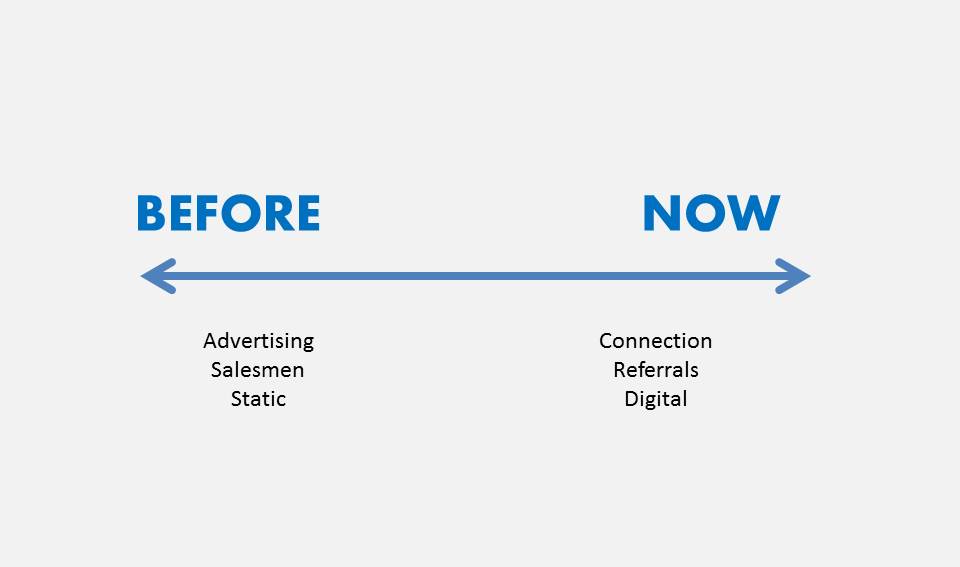
It used to be the loudest, cheapest or funniest that earned the sale. But now that everyone else is loud, cheap and funny – it’s no longer unique.

Now, and in the future, we need to connect. We need to make a connection that lasts and a connection that deserves a response.

That response, in a connected world, will be seen be more people. And the connection spreads.

A problem: it’s much harder to connect than to shout the loudest.

We know what the future looks like. It’s digital and it’s free. It’s honest and transparent. It’s human.

But do we believe it enough to take that step and focus on connecting? It’s scary and different, though it’s the future and we aren’t changing back.

Before and Now

Why the new Kmart Ad is simply brilliant.

Simple message, fun music and excellent execution – that’s what makes Kmart’s 2013 ‘Irresistible’ tv ad one of the best on tv.

On first view, there’s nothing remarkable about it. But so often brands over complicate the main point of an ad: to communicate a memorable message.

Kmart communicate their message and do it in a way that makes you tap your foot (and not forget which brand the ads for).

They use colour, music, dance and fun in a way that highlights Kmart’s key selling proposition; their products are durable, for real people and make you feel pretty fantastic that it doesn’t cost you half a leg.

I want to see more ads like it. A bit of fun goes a long way in connecting with the consumer.

The way we work

The death of the cubicle is not far away. The way we work is still designed around an industrialised model – each cubicle in an office is for one worker doing one job.

That job is done as efficiently as possible, until 5pm, when everyone switches off and walks home.

It’s no different to a factory. Each machine does one job in one space. At the end of the day it stops – until tomorrow.

The problem is the world has moved on but we haven’t. Tablets, laptops and wireless internet mean access is no longer a barrier to exploration. Why would a salesman need a desk when they all they need is in their car or on their phone?

Why should we start at 9am and stop at 5pm when the rest of the world keeps on working 24/7?

We’ve reached a point where it’s no longer efficient to stay put and keep a timesheet. Global networks mean we can be flexible, compete and create anywhere, anytime and any way we want.

Challenge the norm and break the rules. Work the way that works best for you, because it’s the only way we can stay ahead of the game.

An astounding lie

The time spent with my Dad watching the Tour de France are some of the most memorable of my childhood.

One of the best things about the race is that it is like an epic film, with twists and turns at every corner.

The gruelling peaks of the Pyrenees contrast spectacularly with the intense sprints and daredevil descents.

I would replicate the race in the street where I grew up, racing my brother on the road for hours on end.

One of the riders we most admired was 7 time champion and cancer survivor Lance Armstrong.

Many suspected he had cheated, but today he confessed that he indeed was, from the very beginning, using drugs to enhance his performance.

For many years Armstrong has waged a war against drug agencies, media inquiries, interviews and confessions.

From a communications perspective, it was an astounding lie. Up until a few months ago, most people were still convinced he was innocent.

Armstrong deceived the sporting world. His vehement denial and consistently strong public performances perpetuated a complex deception.

The day has come for full disclosure and the relief must be immense. His advisers and lawyers have lost an impossible battle.

The Livestrong foundation does wonderful work, but they will be forever tainted by their founder.

People were hurt by the lie. Kids like me dreamed that his victories were due to hard work and perseverance. Cancer sufferers dreamed that they too could beat the horrible disease.

I, for one, hope that this isn’t the end for Lance. While it is a deep valley, I hope his work with Livestrong will prosper and people will still dream that one day they can reach the peak.

20130118-150559.jpg

The silver bullet

Since the beginning of time marketers have exploited every channel available. Newspapers, radio, TV and now social media.

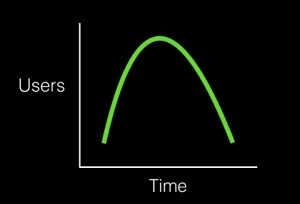
The value of each channel, like most things, can be illustrated by a simple curve.

20130102-131749.jpg
Social media is a valuable channel, no doubt. Yet it is not a silver bullet that will endlessly drive sales and solve a long term problems.

Where many go wrong is that they believe the curve of a particular social network will never drop off.

They invest hours and millions of dollars in perfecting a Facebook, Pinterest or Twitter strategy. But the return on investment, long term, will be minimal.

The idea of social connectedness will continue to grow, no doubt- but certainly not it its current form.

Just as we have moved from black and white tv to multi-channel digital stations in a relatively short time, social media channels will also be ever-changing.

By no means can we underestimate the role of social media as a communications platform.

Just as the past five years have brought us dozens of social networks, the next five will bring hundreds.

There is no silver bullet and we can only control how we allocate our resources. So don’t waste too much on the now.

Not just a game

People don’t go to sporting events to just watch sport. 

They go to experience something with their friends. They go because their partner wants to. They go for the food, the beer, the atmosphere and the chance to scream without looking like a lunatic.

When we promote an event we need to focus on the whole experience, not just the main attraction.  

When personal failures damage reputation

CIA Head
This week we heard CIA Director David Petraeus has stepped down from his role because of an affair with his biographer.

Damage has been done to his family, friends and his career prospects (he was tipped to be a future presidential candidate).

With any crisis like this I try and ask what can be learnt from the mess.

One clear lesson is that the days of the work life and personal life distinction are over.

Howls of protest are heard when recruiters search facebook for drunken photos of applicants. But how naive it was to assume that we can sustain separate identities for separate purposes.

Drunk on the weekend, sober on weekdays. A cheat at home, an angel at work. It doesn’t work like that and it never has.

The truth is our worst moments reflect a part of our true identity just as much as our best.

The only option we have is to be ourselves all the time– transparently. Sure, we can improve ourselves, expect better and try harder.

But in the end it’s the hiding, the lies, double standards and deceit that ruin our reputation.